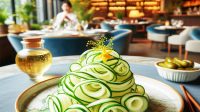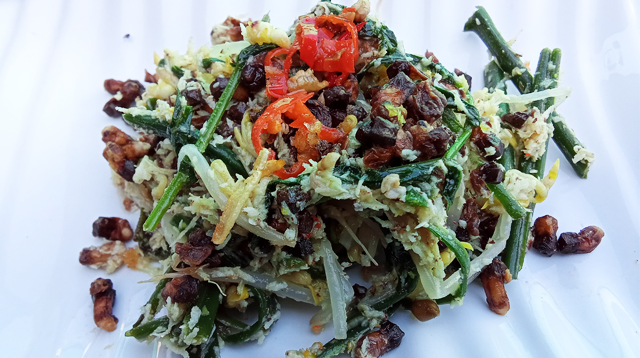
BALINESE community holds a secret, mouth-watering culinary delight, born from the wisdom of its rarely explored forests. Introducing: Urab Nyawan, or Lawar Nyawan! More than just vegetables, this rare dish dares to feature a hidden protein—young beehives—coated in a spicy, savory traditional coconut sauce.
Are you ready to experience this unique, rare, and daring taste sensation? Let’s delve into the history of this extreme dish that must be preserved!
What is Urab Nyawan?
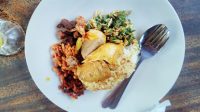
Urab Nyawan is a culinary variant of urab (boiled vegetables mixed with grated coconut sauce) that is uniquely unique because it uses unusual main ingredients: nyawan or honeycomb (bee larvae and pupae), plus fern shoots, bean sprouts and kidney beans.
In Bali, a similar dish is known as Lawar Nyawan. It’s more than just a mix of vegetables; it’s a high-protein dish that combines the savory flavors of Indonesian spicy coconut sauce with the soft texture and unique flavor of bee larvae still in their nests. The beehives used are usually young and contain young bees, not adult bees that have already stung.
Brief History and Origins
The history of the dish urab, or lawar (in Bali), in the Indonesian archipelago can be traced back to the 10th century AD, as evidenced by inscriptions mentioning the word wrak-wrak interpreted as urap-urap. This traditional urap symbolizes balance, uniting elements of the earth (vegetables) and the spiritual (rich spices).
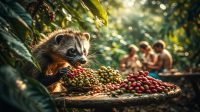
Urab/Lawar Nyawan itself arose from the local wisdom of communities in certain regions, particularly in the interior or traditional villages of Bali (such as Tambakan Village in Buleleng) and several other regions. This dish arose from the community’s need to utilize the abundant protein sources available in their forest environment during the honey or bee harvest season.
Historically, consuming insects, or entomophagy, is an ancient practice common in many cultures, including Indonesia. Nyawan is a highly valued food ingredient because it is considered rare, nutritious, and has a distinctive taste sensation, combining bitter, sweet, and savory flavors.
Preserving Local Cuisine: The Importance of Urab Nyawan
Urab Nyawan symbolizes the richness and boldness of local cuisine that needs to be preserved. Preserving this cuisine is crucial because:
Preserving Local Wisdom: This dish is a marker of cultural identity and the practice of sustainable use of nature by indigenous communities.
Dietary Diversity: Consuming nyawan demonstrates diversification of protein sources, countering the homogeneity of modern food.
Gastronomic Tourism Potential: Extreme and unique foods have always been a draw for tourists seeking authentic experiences.
However, its preservation faces challenges. nyawan is seasonal and dependent on the presence of bees in the wild, which are vulnerable to deforestation and climate change. Conservation efforts should include education about sustainable bee harvesting (without destroying the colony) and encouraging local chefs to continue serving this dish, perhaps in a seasonal format.
Urab Nyawan as a Tourist Attraction
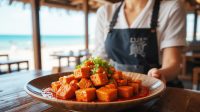
For tourists seeking extreme and authentic cuisine, Urab Nyawan or Lawar Nyawan offers an unforgettable experience.
Exotic Experience: Tourists seek unprecedented flavors. The sensation of consuming bee larvae cooked with traditional Balinese or Madurese spices offers powerful stories and memories.
Special Food Hunting Tours: To sample Urab Nyawan, tourists often have to travel to specific villages in Buleleng, Bali, making for a unique and memorable food hunt.
As a rare culinary heritage, Urab Nyawan is an invitation to the world to appreciate Indonesia’s bold, authentic gastronomic riches, born from a profound harmony between humans and nature. (*)