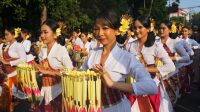
KEBAYA is more than just clothing. It is a piece of cloth that encapsulates the history, culture, and identity of Indonesian women. Within its every curve lies a story that has been passed down from generation to generation. From palaces to the world’s fashion stages, the kebaya has proven itself to be a timeless masterpiece.
Simply put, a kebaya is a traditional Indonesian women’s blouse made of thin materials such as cotton, silk, or brocade, often decorated with intricate embroidery. Typically, the kebaya is paired with a sarong, batik, or songket, wrapped around the waist. There are various types of kebaya, from the Betawi encim kebaya, to the kutubaru kebaya with a stagen at the center, to modern kebayas with more contemporary cuts. Each has its own distinctive characteristics and philosophy.
History and Origins of the Kebaya
The history of the kebaya can be traced back to the 15th century during the Majapahit era. Initially, this garment was introduced as a body covering for women of the nobility and royal families, especially in Java.
During the Dutch colonial period, the kebaya was adopted by European, Eurasian, and Chinese women, making it a popular everyday garment. Kebaya styles also began to evolve, adapting to the tastes and cultures of each group. The encim kebaya, for example, is a blend of Chinese culture, evident in its distinctive “encim” (the term for Chinese women) embroidery.
After independence, the kebaya continued to be a national symbol. Important female figures, including Mrs. Fatmawati Sukarno and Mrs. Tien Suharto, often wore the kebaya at state events. This reinforced the kebaya’s status as an elegant and dignified national dress.
Contemporary Use of the Kebaya
Despite its centuries-old history, the kebaya remains relevant today. Its use varies widely, from formal to casual occasions. In Bali, for example, the kebaya is mandatory attire for women praying at temples and attending customary ceremonies, paired with a kamen (Balinese sarong) and a shawl.
In the tourism sector, the kebaya also plays a crucial role. In many luxury hotels and restaurants in Bali, for example, the kebaya is often the uniform for female staff. This attire not only exudes elegance but also conveys a strong sense of local culture, making guests feel more connected to the destination they are visiting. The presence of staff wearing kebaya creates an authentic and memorable experience, as well as being a unique attraction.
Cultural Preservation and Tourism Attraction
Amidst globalization, the kebaya has become a key bulwark for cultural preservation. Many young designers are now innovating with the kebaya, creating modern designs without losing its authentic essence. Collaborations between designers and local artisans are also helping to revitalize the traditional textile industry.
The kebaya also serves as an ambassador for Indonesian tourism. Many tourists, both domestic and international, are drawn to purchasing kebaya as souvenirs or even wearing them during their vacations. In Bali, the kebaya is an integral part of rituals and daily life, allowing tourists to easily recognize and appreciate its beauty. The experience of shopping for a kebaya at a traditional market or local boutique is a compelling agenda for them.
Where to Buy Kebaya in Bali
For those of you who want an authentic Balinese kebaya, there are many places to visit:
- Sukawati Art Market: Famous as a center for Balinese crafts and souvenirs, you can find a wide variety of Balinese kebaya at affordable prices.
- Textile Shop Complex on Jalan Sulawesi, Denpasar: This is the “center” of textiles in Bali. You can buy brocade, lace, and other materials to make your own kebaya, or have one made from the tailors lining the street.
- Balinese Boutiques and Clothing Stores: For more modern and exclusive designs, you can visit boutiques in Seminyak, Kuta, or Ubud that offer kebayas designed by local designers.
Wearing a kebaya is not just about dressing up; it’s also about celebrating Indonesia’s rich cultural heritage. Every kebaya you wear is a proud statement of your unique and unmatched national identity. (*)